






The Vice-Chancellor of the University of Ghana, Prof. Nana Aba Appiah Amfo, has underscored the importance of collaboration, mentorship and targeted capacity building in strengthening women and youth participation in the African Continental Free Trade Area (AfCFTA).
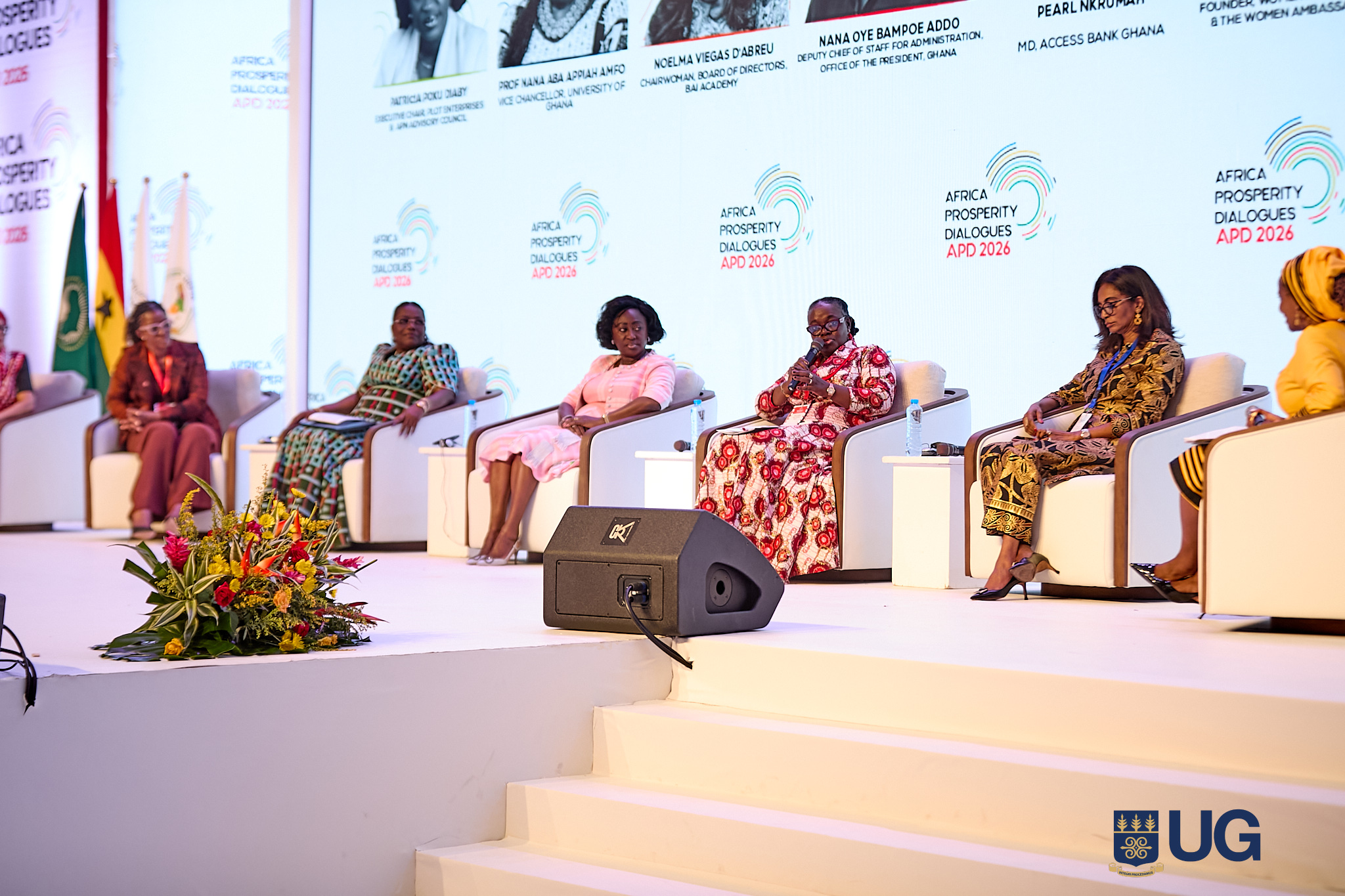
Prof. Amfo made these remarks during day one of the Africa Prosperity Dialogues (APD) 2026, organised by the Africa Prosperity Network and held under the theme “Empowering SMEs, Women and Youth in Africa’s Single Market: Innovate. Collaborate. Trade.”
She joined a high-level panel discussion titled “From Boardrooms to Borders: Women Driving the AfCFTA Agenda,” alongside distinguished leaders, including Hon. Nana Oye Bampoe Addo, Esq., Deputy Chief of Staff (Finance and Administration), Office of the President and Pearl Nkrumah, Managing Director of Access Bank PLC, among other prominent women leaders.
The Africa Prosperity Dialogues 2026 brings together policymakers, investors, innovators, entrepreneurs and diaspora leaders to unlock the transformative potential of SMEs, women and youth within Africa’s single market. The platform seeks to promote collaboration, showcase scalable solutions and address barriers to inclusive trade, particularly at a time when SMEs account for nearly 80 percent of employment across Africa but continue to face an estimated US$331 billion financing gap, while women entrepreneurs receive less than 2 percent of venture capital funding.
Contributing to discussions on women’s leadership in advancing the AfCFTA agenda, Prof. Amfo emphasised that building the right human capital through education, mentorship and empowerment is central to solving many of the challenges confronting women-led enterprises. She noted that meaningful progress requires collaboration across industries, institutions and sectors to create opportunities that enable women to scale their businesses and actively participate in cross-border trade.
The Vice-Chancellor highlighted several University of Ghana initiatives operationalised in recent years to equip young people and women with future-ready skills, including the establishment of innovation spaces and the Digital Youth Village, which support entrepreneurship, digital skills development and innovation-driven learning. She stressed that digitalisation remains critical in the current global economy, noting that while many women are already active in digital spaces, greater efforts are needed to enhance their visibility, access to markets and participation in digital trade ecosystems.
Prof. Amfo further indicated that the University’s strategic focus on engagement and partnerships continues to drive programmes that prepare students for the evolving job market through digital transformation initiatives, experiential learning and structured internship opportunities. This, she said, ensures graduates are industry-ready and capable of contributing meaningfully to economic development in Ghana and across the continent.
The Vice-Chancellor also highlighted the importance of awareness creation and education on the AfCFTA protocols, noting that women must be fully informed about available frameworks and opportunities to participate effectively. According to her, if women remain on the periphery of policy awareness and implementation processes, they risk being excluded from the benefits of the continent’s expanding single market.
Sessions at APD 2026 are expected to generate practical recommendations and policy proposals to be presented to the African Union and African Heads of State, with the goal of advancing inclusive trade and strengthening participation of SMEs, women and youth across the continent.
The participation of the University of Ghana in the Dialogue reflects the institution’s commitment to supporting Africa’s development agenda through research, partnerships, innovation and capacity building aimed at empowering the next generation of leaders and entrepreneurs.


