



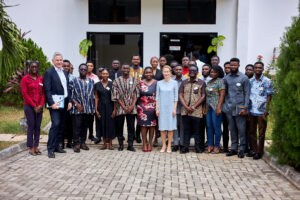



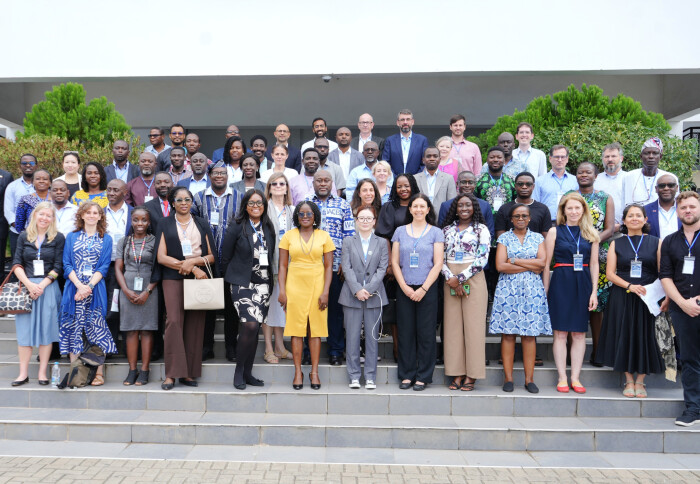
Efforts to close the global antimicrobial resistance (AMR) diagnostics gap have received a major boost with the advancement of plans for a new global consortium, following a high-level convening of international partners in Accra, Ghana.
Antimicrobial resistance is now recognised as one of the most pressing public health threats of the 21st century. Infections that were once easily treated with antibiotics are increasingly becoming resistant, resulting in prolonged illness, higher healthcare costs, and greater risks of death.
A central challenge is the lack of affordable and accessible diagnostics to quickly and accurately identify resistant infections. Without reliable diagnostics, health practitioners often resort to prescribing broad-spectrum antibiotics, which accelerates resistance and undermines global treatment efforts. This gap has driven calls from researchers, governments, and international organisations for urgent innovation and coordinated action.
The Accra meeting, organised under the leadership of the Fleming Initiative, brought together stakeholders from across the globe to strengthen cooperation in developing and delivering diagnostic tools that are both innovative and accessible. The week-long event created a platform for academics, health professionals, policymakers, non-profit organisations, and industry representatives to define shared priorities for accelerating progress against AMR.
Professor Alison Holmes, Director of the Fleming Initiative, described the gathering as a turning point in the global response to AMR. “This meeting marks a critical turning point in the global effort to close the diagnostics gap in antimicrobial resistance. Bringing together such a diverse and committed group of partners in Accra has allowed us to build shared priorities rooted in both innovation and implementation,” she said.
The launch was hosted at the University of Ghana, a decision organisers said was deliberate to ensure the conversation remained grounded in the experiences and leadership of low- and middle-income countries (LMICs). Dr Cecilia Ferreyra, the Fleming Initiative’s Global Consortium event lead organiser, explained: “Hosting the launch at the University of Ghana, a centre of scientific excellence in the region, anchored our discussions in the realities and strengths of LMIC leadership. It’s exactly the kind of collaboration we need to drive sustainable change and this was the perfect place to do it.”
The founding members of the consortium include the Wellcome Trust, Cepheid, the West African Centre for Cell Biology of Infectious Pathogens (WACCBIP) and the University of Ghana, GARDP, FIND, and the Ghana Ministry of Health. Together, these partners will guide the consortium’s structure, coordinate pilot projects, and help create sustainable financing mechanisms for expanding access to AMR diagnostics.
Throughout the week, speakers drawn from leading organisations contributed perspectives on innovation, capacity building, and policy needs. These organisations included the University of Ghana, WACCBIP, Navrongo Health Research Centre, Kwame Nkrumah University of Science and Technology, Incas Diagnostics, Centre for Global Development, the World Health Organization, University College London, the Zambia National Public Health Institute, Resolve to Save Lives, FIND, the Fleming Initiative, the Clinton Health Access Initiative, the African Society for Laboratory Medicine, the International Centre for Antimicrobial Resistance Solutions, Aurum Institute Ghana, the Global AMR R&D Hub, CARB-X, ProtonDx, ACT-IVD, ReAct Africa, Africa CDC, the Max Planck Institute, and Imperial College London.
Professor Gordon A. Awandare, Pro-Vice Chancellor for Academic and Student Affairs at the University of Ghana and Founding Director of WACCBIP, emphasised the importance of moving beyond invention to implementation. “It is no longer enough to invent diagnostics in isolation, we must embed invention within local systems, ensure skills, infrastructure and regulatory support are present, and tailor tools to the contexts in which they will be used. Only then can we truly reduce the burden of AMR in Africa and beyond,” he remarked.
The meeting also drew a diverse group of attendees from institutions around the world, reflecting the global urgency of the problem. Participants represented universities and research centres such as the University of Ghana, University of Ghana Medical School, University of Cape Coast, University of Cape Town, University of Ibadan, and KNUST. Diagnostic companies including Incas Diagnostics, Roche Diagnostics, and bioMérieux also took part, alongside international health organisations such as the World Health Organization, Médecins Sans Frontières, PATH, the Africa CDC, and the Global AMR R&D Hub.
Other attendees included the Noguchi Memorial Institute for Medical Research, Aurum Institute, the Elizabeth Glaser Pediatric AIDS Foundation, University of Toronto/Sinai Health, the Ministry of Health and Medical Education in Iran, LifeArc, India Health Fund, the Institute of Tropical Medicine, and the Zambia National Public Health Institute, among others.
By the end of the meeting, partners had agreed on immediate next steps, including formalising the governance structure of the consortium, identifying opportunities for pilot diagnostic deployment projects, and developing strategies for sustainable funding. The emphasis was on creating an inclusive and globally representative platform that ensures diagnostics innovation translates into equitable access, particularly in regions that face the greatest burden of antimicrobial resistance.
The convening in Accra signalled a clear commitment to collective action. With LMIC leadership at the centre, international partners expressed optimism that this new consortium could drive progress that bridges the gap between invention and real-world impact.


