

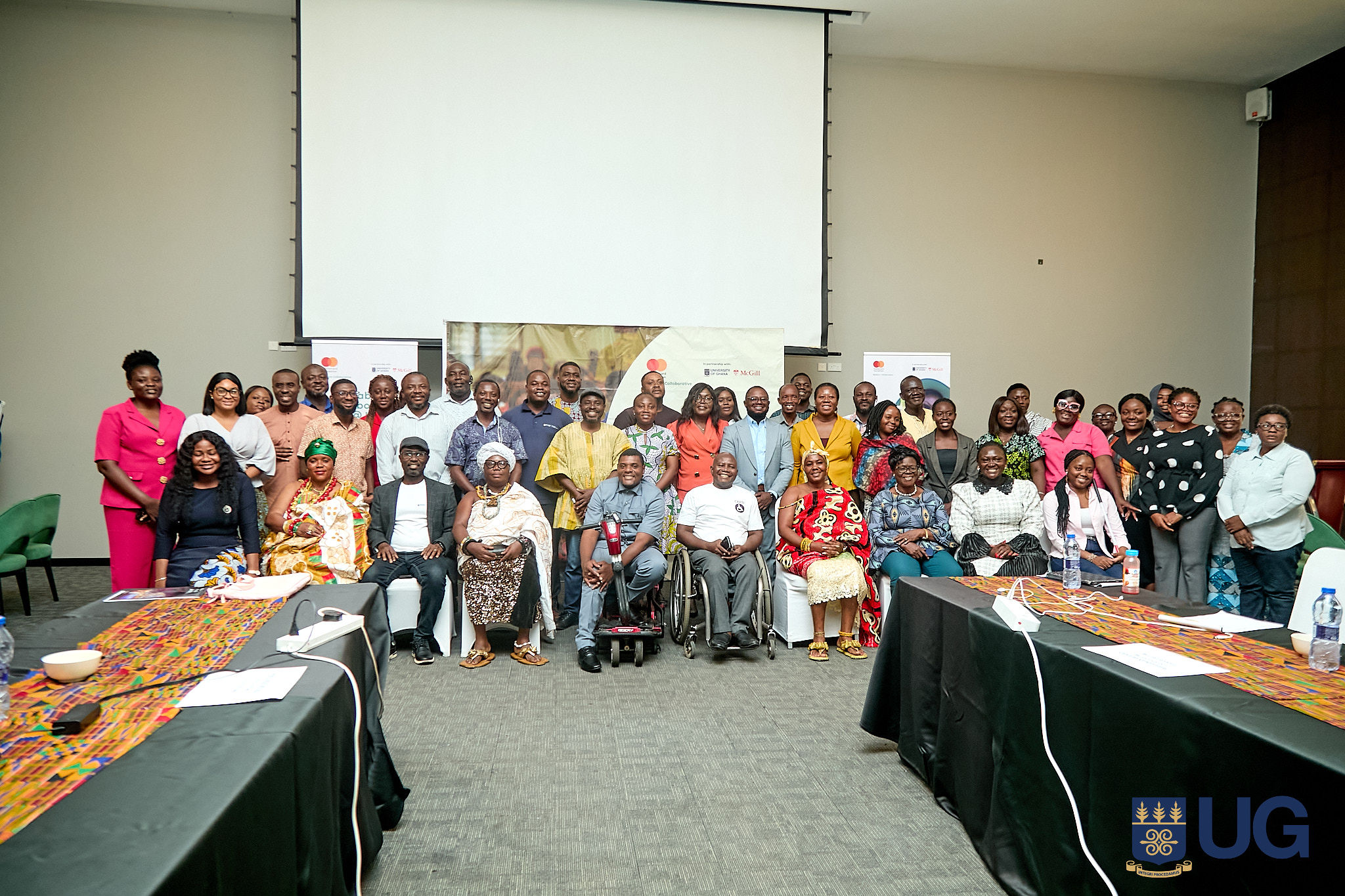
To advance the inclusion of young women, persons with disabilities (PWDs) and internally displaced persons (IDPs) in Ghana’s agrifood system, the Nkabom Collaborative at the University of Ghana has convened a full-day stakeholder forum in Tema to engage key stakeholders, gather insights and identify practical strategies for more inclusive project implementation.
The engagement forms part of an inclusive approach adopted by the Collaborative to facilitate and incorporate diverse perspectives into its implementation while ensuring that issues of inclusivity and diversity remain central to the design and delivery of its interventions.
Themed “Reaching Out: Leveraging Opportunities for Inclusivity,” the forum provided a platform for identifying opportunities and challenges affecting the participation of young women, persons with disabilities, migrants and internally displaced persons in Ghana’s agrifood system.
Participants included representatives of government institutions, development partners, civil society organisations, disability advocacy groups, women-focused organisations, migrant and refugee-serving institutions as well as traditional and community leaders working to promote inclusion and livelihoods development.
Delivering remarks at the forum, Team Lead of the UG Nkabom Collaborative, Prof. Richmond Aryeetey, underscored the importance of collaboration in addressing challenges across Ghana’s food systems while creating opportunities for young people.
He noted that the Collaborative was working to address pressing challenges in Ghana’s food systems, including food security, nutrition and employment creation, through a peer-learning approach that brings together expertise from academia, industry, communities and development partners.
Prof. Aryeetey explained that the Nkabom Collaborative is a partnership involving seven institutions in Ghana and a partner institution in Canada working together to co-create innovative solutions for transforming agrifood systems while improving livelihoods and nutrition outcomes.
He stressed that the stakeholder forum forms part of a broader effort to obtain critical inputs from stakeholders whose experiences and perspectives can help shape the implementation of the project.
Particularly highlighting the role of women in agrifood systems, Prof. Aryeetey noted that women constitute a significant proportion of actors across the sector and therefore require deliberate support and empowerment to maximise their contributions.
He further observed that malnutrition remains a major challenge in Ghana and emphasised the need to increase access to nutritious foods through sustainable food systems. According to Prof. Aryeetey, improving nutrition is critical to enhancing learning outcomes, productivity and overall human development.
“Our primary approach is to create opportunities for young people, especially young women, to transform food systems through entrepreneurship and innovation. We are here to learn from stakeholders and understand how we can become more intentional about reaching young women, persons with disabilities and internally displaced persons, groups that we recognise we have not reached sufficiently. By the end of the day, we hope to identify practical ways of ensuring that the benefits of Nkabom are accessible to these groups,” the Collaborative Team Lead stated.
Providing an overview of the UG Nkabom Collaborative, its objectives and implementation pillars, the Access and Success Pillar Lead, Dr. Fidelia Dake, explained that the initiative seeks to connect young people to opportunities across the agrifood value chain through education, entrepreneurship and inclusive access to opportunities.
She noted that over a ten-year period, the Collaborative aims to support 3,000 businesses and contribute to the creation of 90,000 jobs while promoting a more nutritious, sustainable and thriving agrifood system. According to Access and Success Pillar Lead, these goals are being pursued through three interconnected pillars of Education, Entrepreneurship and Access and Success.
Dr. Dake explained that while Ghana’s agrifood system presents numerous opportunities ranging from production and processing to transportation, marketing and technology, many young people remain disconnected from these opportunities despite the country’s large youth population.
She added that the stakeholder engagement was organised to deepen understanding of the realities faced by women, persons with disabilities, migrants and internally displaced persons and to identify strategies that will enable the Collaborative to better serve these groups.
Highlighting progress made by the Collaborative, Dr. Dake disclosed that 81 young people have been trained in livestock and herbal medicine production, with women accounting for 55 percent of participants. She added that the project facilitated the participation of 13 persons with disabilities and 81 women in a recent entrepreneurship bootcamp while supporting two female PhD scholars and four postdoctoral researchers.
She further indicated that the Entrepreneurship Pillar has trained 200 young entrepreneurs through a five-day entrepreneurship bootcamp, supported community immersion activities and facilitated international exposure opportunities for selected participants.
Dr. Dake also outlined implementation challenges, including low application rates among women, lower participation and completion rates among female participants, role conflicts and cultural barriers affecting women, as well as limited participation by persons with disabilities and internally displaced persons.
She noted that while women constituted 53 per cent of participants in some project activities, participation by persons with disabilities remained at about three percent, with limited representation of internally displaced persons. According to her, the engagement was necessary to identify barriers and develop strategies to ensure greater participation of these groups in the project’s interventions.
Presenting findings from stakeholder consultations conducted by the Collaborative, Project Team Member, Ms. Winifred Frimpomaa, shared key lessons emerging from engagements with 18 organisations working across all sixteen regions of Ghana.
In her presentation, Ms. Frimpomaa highlighted findings from stakeholder engagements, noting that partner organisations working across Ghana’s agrifood sector collectively reach more than one million people and represent a valuable network through which the project can strengthen outreach, expand access to opportunities and enhance inclusive participation.
Ms. Frimpomaa indicated that financial and logistical barriers emerged as the most common challenges affecting participation in agrifood opportunities. Stakeholders identified transport costs, unstable incomes and participation-related expenses as major constraints affecting women, persons with disabilities, migrants and internally displaced persons.
She also mentioned social and cultural barriers affecting women, accessibility challenges faced by persons with disabilities and the limited access to training, financing and support networks available to migrants and internally displaced persons seeking sustainable livelihoods.
Despite these challenges, she noted that stakeholders identified significant opportunities for collaboration through existing community networks, referral systems and trusted local structures that can support more inclusive implementation.
As part of the forum, participants were divided into breakout groups focusing on Women in Agriculture and Production, Women in Agribusiness and Entrepreneurship, Persons with Disabilities and IDPs, Migrants and Kayaye Women.
The Women in Agriculture and Production group explored opportunities for collaboration with organisations such as Agrihouse Foundation, FarmerTribe, the Apex Body of Women in Poultry, municipal assemblies and social welfare institutions to support referrals, training and leadership development initiatives.
Discussions in the Women in Agribusiness and Entrepreneurship group centred on partnerships with organisations including the Chamber of Women in Agribusiness (CHAWA), SheStandsOut Foundation and Holystic Nutrition Organisation to support agribusiness training, entrepreneurship development and pathways for women-led enterprises.
The Persons with Disabilities group examined strategies for improving accessibility through collaborations with the Ghana Federation of Disability Organisations (GFDO), the Centre for Employment of Persons with Disability (CEPD), No Limits Consulting and schools for the deaf. Proposed areas of collaboration included inclusive curriculum development, sign language support, internship opportunities and referral systems.
The IDPs, Migrants and Kayaye Women group discussed opportunities to strengthen partnerships with the International Organisation for Migration (IOM), UNHCR, the Kayayei Association, FarmerTribe and Agrihouse Foundation to support referrals, agribusiness training, business development services and IDP-sensitive programming.
Insights from the breakout sessions were presented during a panel session, with representatives from each group sharing key observations, recommendations and potential partnership pathways for consideration by the Nkabom Collaborative.
Moderator for the forum and Education Pillar Lead, Dr. Hayford Mensah Ayerakwa, expressed appreciation to participants for their contributions and assured stakeholders that the recommendations generated would be incorporated into the design and implementation of future interventions.
He noted that the Collaborative would continue engaging stakeholders and communities to ensure that its programmes remain responsive, inclusive and aligned with the needs of beneficiaries.
Insights from the forum are expected to inform the next phase of project implementation and strengthen partnerships aimed at expanding opportunities for young women, persons with disabilities and internally displaced persons across Ghana’s agrifood system.
