

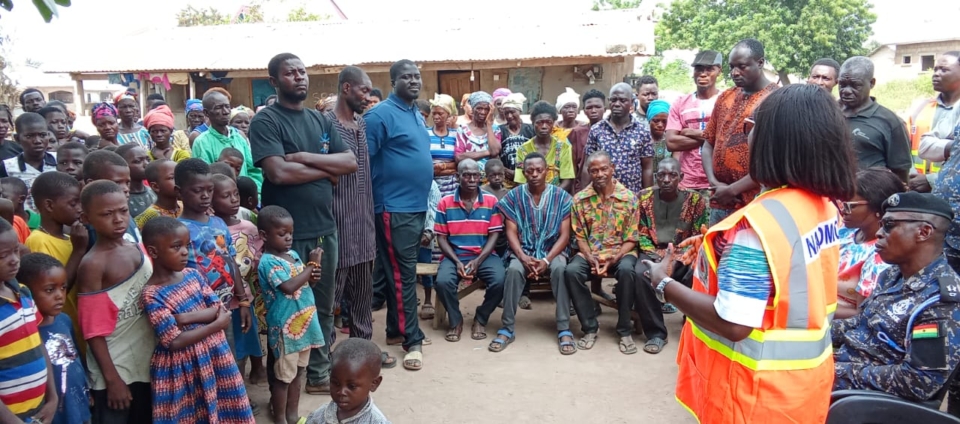
For many scholars and national institutions, forced displacement is often approached through the language of numbers, policies and protection frameworks. It is discussed in terms of caseloads, legal instruments, humanitarian mandates, and development responses. However, for forcibly displaced persons themselves, displacement is lived first and foremost as a daily negotiation of uncertainty, about safety, belonging, survival, and the future.
In this lived reality, one question quietly shapes almost every decision is how do people find their way through displacement when formal support is limited, uneven, or absent? Increasingly, the answer lies not only in material assistance but in communication, how information is shared, trust is built, and relationships are sustained within host communities.
Across West Africa, forced displacement has been shaped by a combination of protracted insecurity, environmental stressors, and fragile governance systems. These pressures have stretched humanitarian responses and placed sustained strain on host communities. While Ghana is often viewed as a relatively stable destination within the subregion, recent displacement dynamics reveal a far more complex picture. Displaced populations must navigate challenges linked to settlement, social cohesion, resilience, and the difficult question of whether and when return is possible.
Much of the existing research on forced displacement in Africa has focused on livelihoods, protection mechanisms, and institutional responses. These are undoubtedly critical. However, comparatively less attention has been paid to the everyday social processes that shape how displaced persons cope, adapt, and make decisions about the future. Communication practices and community-based support systems are central among these processes, particularly in contexts where humanitarian assistance does not reach everyone equally.
Communication, in displacement settings, I believe, extends beyond the transmission of information. It is conceived as a social process through which displaced persons establish trust, negotiate belonging, and access opportunities within unfamiliar environments. Through conversations with neighbours, religious leaders, local authorities, and fellow displaced persons, individuals learn where to find support, how to avoid risk, and how to position themselves within host communities.
In many cases, these informal exchanges become more reliable than official channels.
Alongside communication, community support systems play a decisive role in shaping resilience. These systems include formal actors such as state institutions, civil society organisations, and humanitarian agencies, but they are equally rooted in informal networks, family ties, friendship circles, faith-based groups, and neighbourhood solidarity. Where formal protection mechanisms are weak or overstretched, displaced persons often rely heavily on these local networks to meet basic needs, resolve conflicts, and rebuild a sense of normalcy.
Crucially, these communicative and support practices influence how people survive displacement and how they imagine their future. But for such imagination to become reality, social cohesion within host communities should first be able to strengthen resilience, ensure there is a sense of belonging among displaced persons and reduce the urgency of return. On the contrary, exclusion, misinformation, or breakdowns in trust can heighten vulnerability and reinforce aspirations to leave, whether to return to places of origin or to move onward elsewhere.
Understanding the links between communication, community support, resilience, and return, therefore, offers valuable insights into displacement beyond policy texts and humanitarian frameworks. It draws attention to the agency of displaced persons and the social infrastructures they actively build, often under conditions of profound uncertainty.
There is a growing need to complement institutional responses with deeper engagement with these everyday social dynamics since displacement in West Africa is becoming increasingly protracted and complex. Authorities and sector players must then begin the conscious effort of recognising communication as a form of humanitarian resource, and community support as a foundation for resilience, which can help reframe how displacement is understood, governed and addressed.
One thing that must remain long after emergency interventions fade is how these social processes continue to shape whether displaced persons endure, adapt or ultimately find their way home.
